
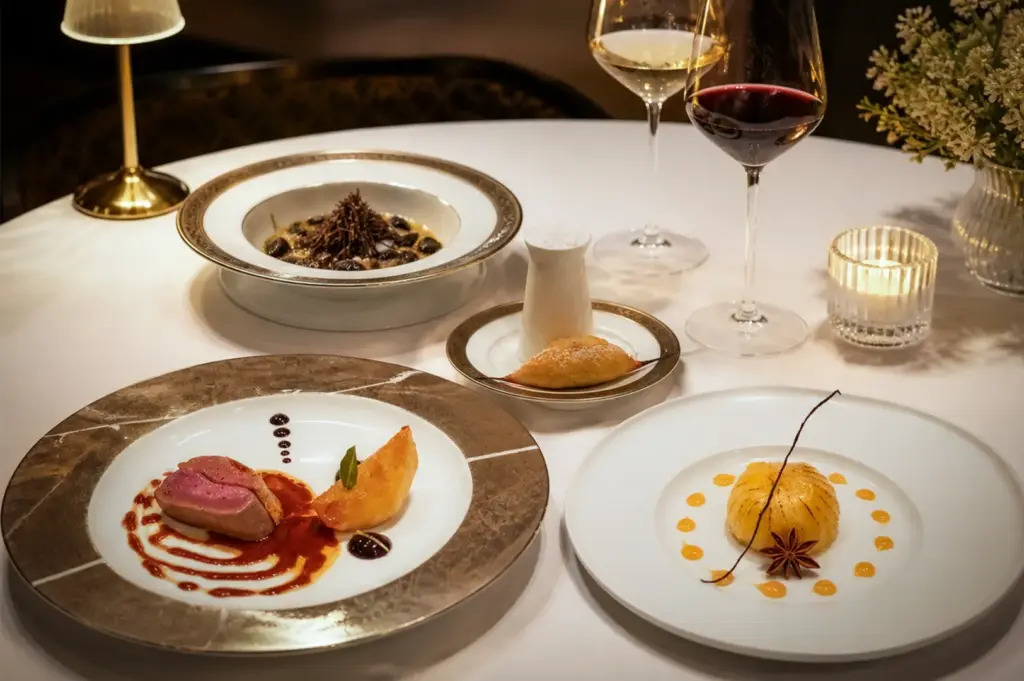
There’s a common expectation that Michelin-starred restaurants are all about perfection, but sitting through one in Singapore, what stands out more is how controlled everything feels.
Not rigid, but intentional.
From the moment you’re seated, there’s a rhythm to how things move. Service is precise without feeling mechanical, and each course arrives at a pace that gives you just enough time to process what you’ve just had before something new appears.
What makes Michelin dining different isn’t necessarily complexity. In fact, many dishes are surprisingly simple at first glance. The difference is in how everything is balanced. Flavors don’t compete, and nothing feels excessive. It’s measured.
You start to notice small details more than anything else. The temperature of a dish, the way a texture changes after a few seconds, or how a sauce ties everything together without becoming the focus. These aren’t things you actively look for, but they become obvious as the meal progresses.
There’s also a sense of restraint that defines the experience. Portions are controlled, seasoning is deliberate, and even presentation avoids unnecessary elements. It’s clear that every decision has been thought through, but it’s never explained to you directly.
By the end, there isn’t always a single dish that stands out above everything else. Instead, it’s the consistency that stays with you, the feeling that every course was part of a larger flow rather than a collection of highlights.
That’s what Michelin dining tends to do well. It doesn’t rely on big moments. It builds something steady from start to finish.
If you’re curious about how different dining formats shape experiences like this, you can explore more here, where these details are looked at more closely.