
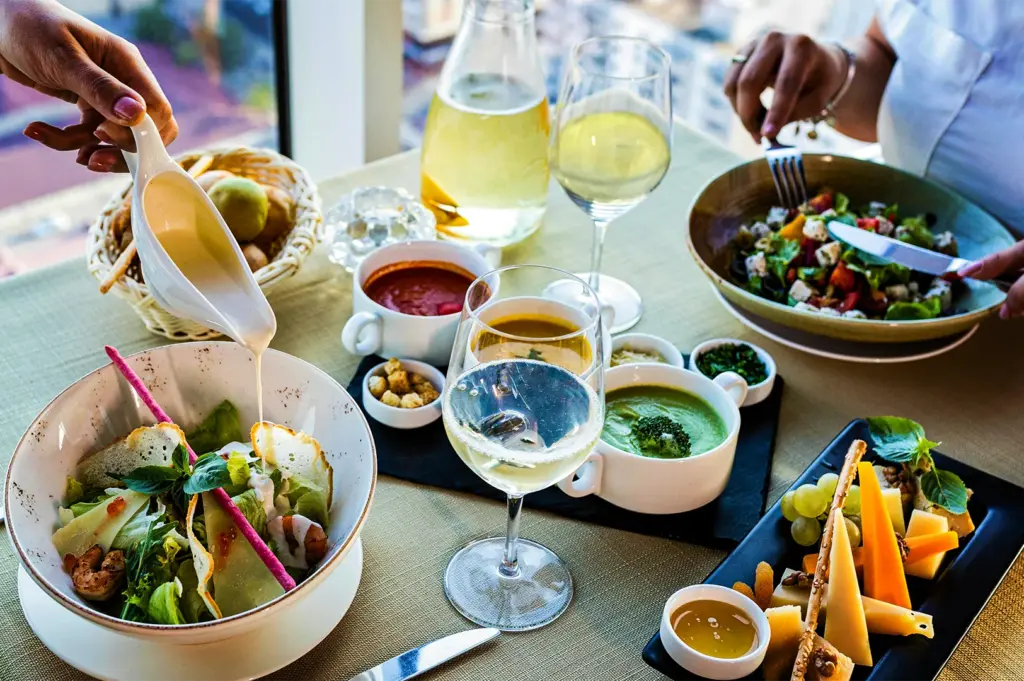
Not every restaurant stays with you after the bill is paid. Most meals fade quickly into routine, becoming part of the blur of everyday life. You remember whether the food was good, whether the service was fast, and maybe which dessert you ordered. Then the experience disappears into the background of the week.
But some restaurants remain long after the evening ends.
You remember the way the room sounded before your first course arrived. You remember the lighting, the movement of the staff, the pause between dishes, and the feeling of sitting across from someone while time seemed to slow down for a few hours. The food matters, of course, but what lingers is often something much deeper than flavor.
Some restaurants turn dinner into memory because they understand that dining is emotional before it is technical.
The best restaurants are rarely defined by extravagance alone. Luxury ingredients and beautiful interiors can impress people temporarily**, but memory is created through atmosphere, attention, and feeling.** A truly memorable dining experience makes guests feel present. It removes the noise of the outside world and replaces it with something quieter and more intentional.
That is why certain meals become attached to specific periods of life.
A restaurant can remind someone of the beginning of a relationship, a difficult goodbye, a celebration after years of hard work, or a conversation that changed everything. Long after people forget the exact ingredients of a dish, they remember who was sitting beside them. They remember the emotion attached to the evening.
Food has always carried emotional weight. It is one of the few experiences that engages people completely. Taste, scent, sound, texture, and environment all work together at the same time. When those details are handled carefully, the result becomes immersive rather than transactional.
This is where exceptional restaurants separate themselves from ordinary ones.
The pacing feels deliberate instead of rushed. Service feels intuitive instead of rehearsed. Every course arrives with purpose. Nothing feels accidental, even in the smallest details. A well-designed dining room understands silence as much as conversation. It allows people to settle into the evening naturally.
The most memorable restaurants also understand restraint.
They do not overwhelm guests with unnecessary theatrics. Instead, they focus on clarity and rhythm. A simple dish prepared with precision often creates a stronger emotional response than something overly complicated. Sometimes a warm piece of bread served at exactly the right moment says more about hospitality than the rarest ingredient on the menu.
People often assume memorable dining experiences must happen inside famous fine dining establishments, but memory is not exclusive to luxury. A small neighborhood restaurant can become unforgettable when it arrives at the right moment in someone’s life. The emotional timing matters as much as the cuisine itself.
Still, fine dining has a unique ability to heighten emotion because it encourages people to slow down.
Modern life rarely gives people uninterrupted time anymore. Most meals are rushed between responsibilities, screens, and notifications. Fine dining interrupts that pace intentionally. It asks guests to sit still, notice details, and experience time differently. In that environment, conversations become deeper, observations become sharper, and ordinary moments suddenly feel significant.
That is why tasting menus often feel personal even when chefs never speak directly to guests. Each course creates a gradual emotional rhythm throughout the evening. There is anticipation, surprise, comfort, nostalgia, and reflection built into the progression of the meal.
The restaurant becomes more than a place to eat. It becomes a setting attached to emotion.
Years later, people rarely describe these experiences by saying, “The fish was excellent,” or “The dessert was balanced.” Instead, they say things like, “That was the night we finally talked honestly,” or “That dinner felt different from every other one.” The memory expands beyond the plate itself.
This is the invisible power of hospitality.
The best restaurants are not simply serving food. They are creating conditions for human connection. They are designing environments where people become more attentive to each other and to themselves. That emotional awareness is what transforms a meal into something lasting.
In the end, memorable restaurants succeed because they understand something many places forget: people may arrive for the food, but they return for the feeling.
And sometimes, years later, a single scent, flavor, or photograph from that evening is enough to bring the entire memory back.