
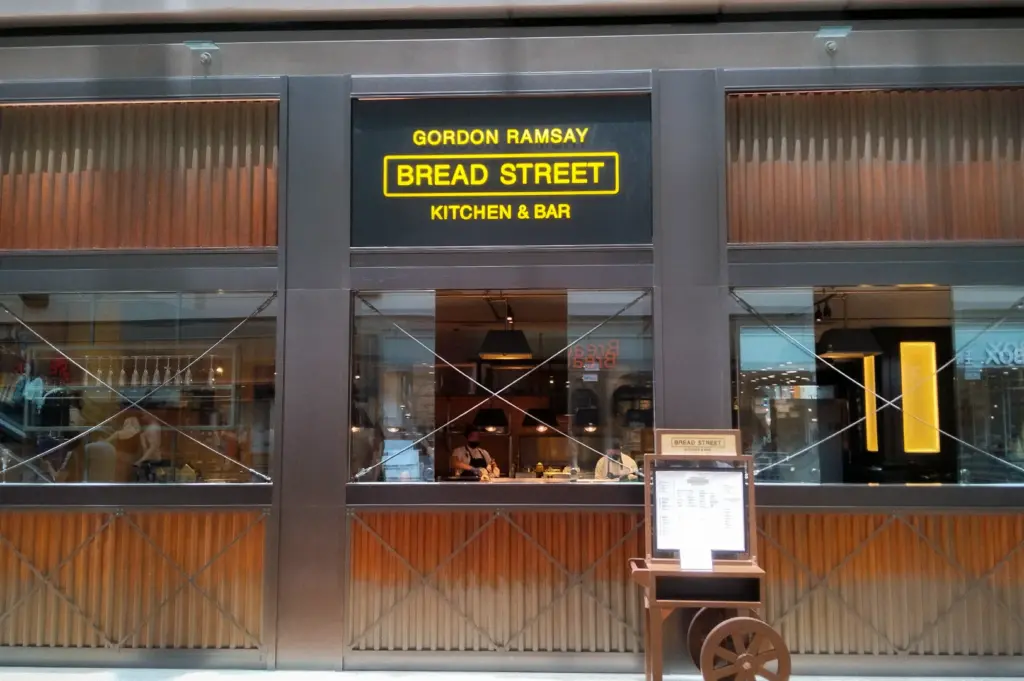
On one hand, it carries Gordon Ramsay’s name, which suggests precision, control, and a certain level of refinement. On the other, it presents itself as a casual dining concept, with a broad menu and a more relaxed structure. When I visited on a Friday evening around 7:30pm, it became clear quite quickly that the experience leans more toward the latter.
It’s not trying to replicate a fine dining format. Instead, it operates as a high-volume, comfort-driven restaurant within a premium environment. That distinction matters, because it shapes how everything, from food to service, is delivered.
The Food Focus: Signature Dishes That Define the Menu
The menu here at Bread Street Kitchen is built around recognisable dishes. There’s no progression, no tasting structure, and no attempt to guide the diner through a curated sequence. Instead, you’re given a wide selection, and the experience depends largely on what you choose.
Beef Wellington (~S$68)
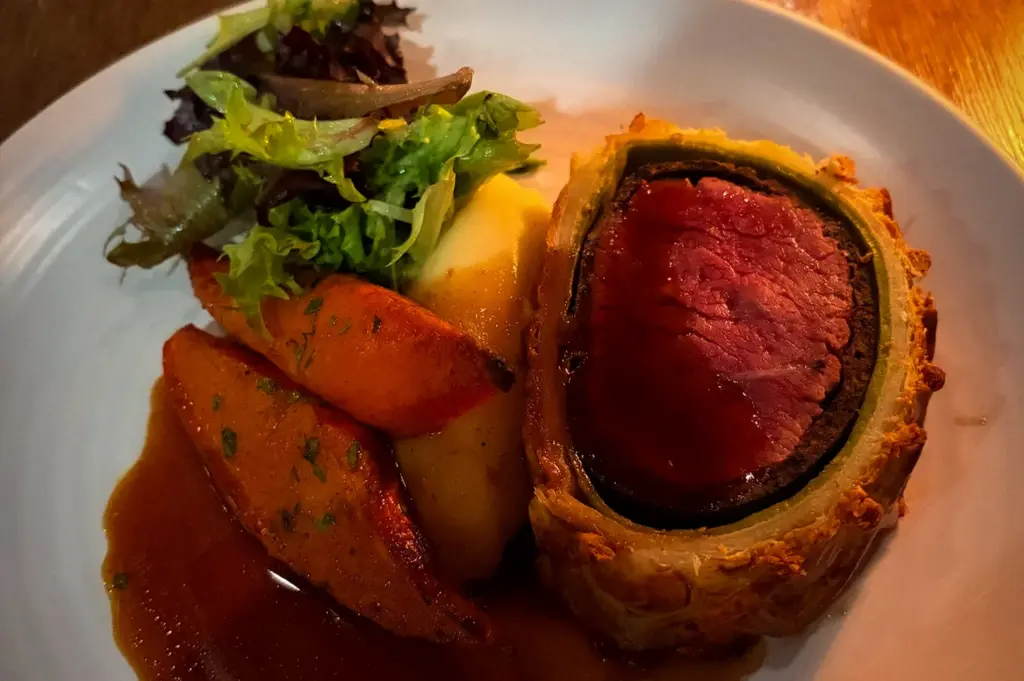
This is the anchor dish of the menu, and naturally, it carries the most expectation. This was the first thing I tried, mostly because it’s what the restaurant is known for.
The pastry came out golden and crisp, and you can smell the butter straight away once it’s cut open. Inside, the beef was tender, though slightly more cooked than I expected. The mushroom layer added a deeper, earthy note, and everything was tied together with a rich jus.
It’s quite a heavy dish overall. After a few bites, you start to feel the richness build up, so it’s something I’d recommend sharing rather than ordering individually.
Fish & Chips (~S$48)

I added this partly to balance things out, and it turned out to be one of the more straightforward dishes.
The batter was light and stayed crisp throughout, which I noticed right away. It didn’t feel oily, and the fish inside was soft and flaky without falling apart. The portion was also more generous than expected, especially compared to the Wellington.
It’s not trying to do anything new, but it works. This is probably the safest order on the menu if you want something reliable.
Sticky Toffee Pudding (~S$22)

I ended with this, and it was easily one of the better parts of the meal.
The sponge was warm and soft, soaking up the toffee sauce without getting too dense. The sweetness was there, but it didn’t feel overwhelming, especially with the cold ice cream on top.
What stood out was the temperature contrast, it made the whole dish feel more balanced. It’s simple, but it’s done well.
A Quick Note on How It All Came Together
Across the meal, the dishes felt consistent with what I had expected going in, nothing overly experimental, but generally solid.
Some items stood out more than others. The Fish & Chips and dessert felt more complete, while the Beef Wellington leaned heavier than I anticipated. It’s not a bad thing, but it does affect how much you enjoy it over time.
If anything, the experience feels more about familiar dishes done at a slightly elevated level rather than something that pushes too far in one direction.
Atmosphere and Layout: Energy Over Intimacy
Once the food is set aside, the next defining element is the environment.
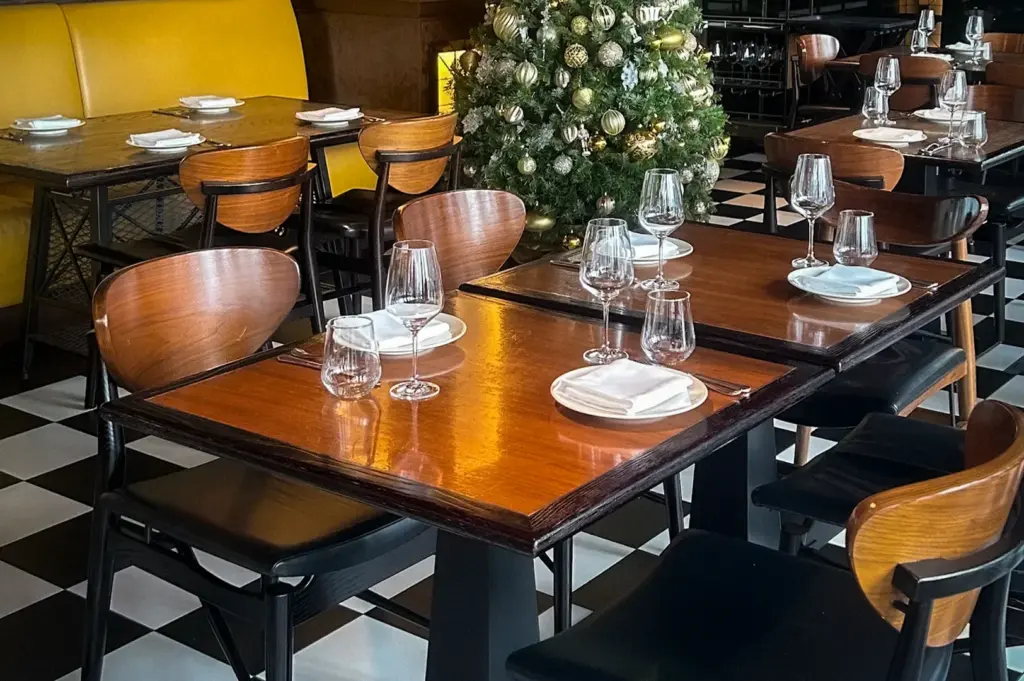
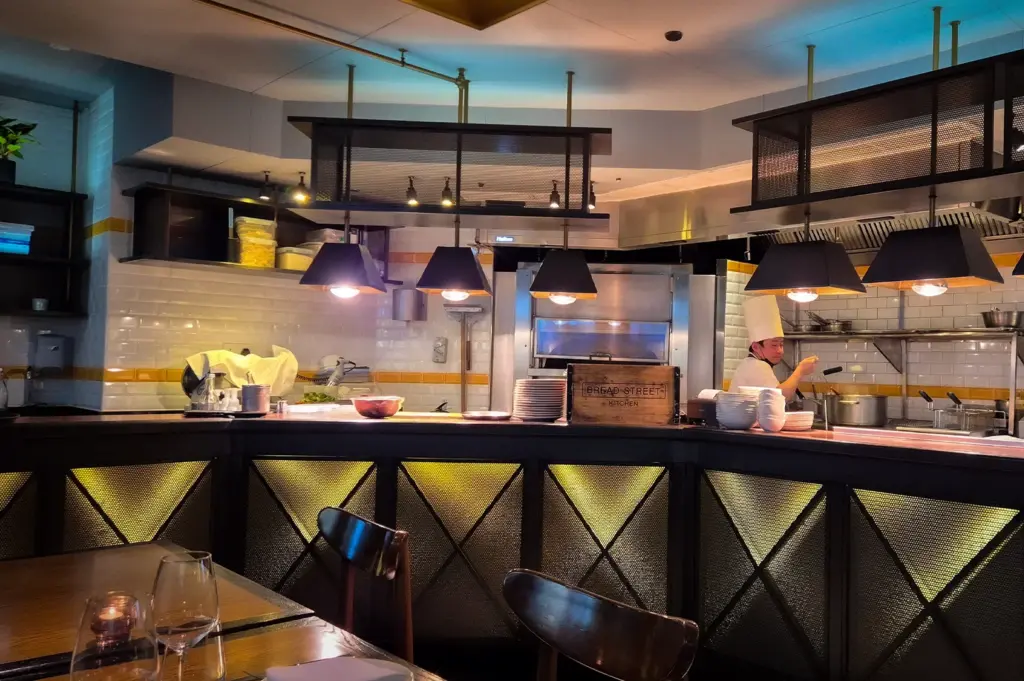
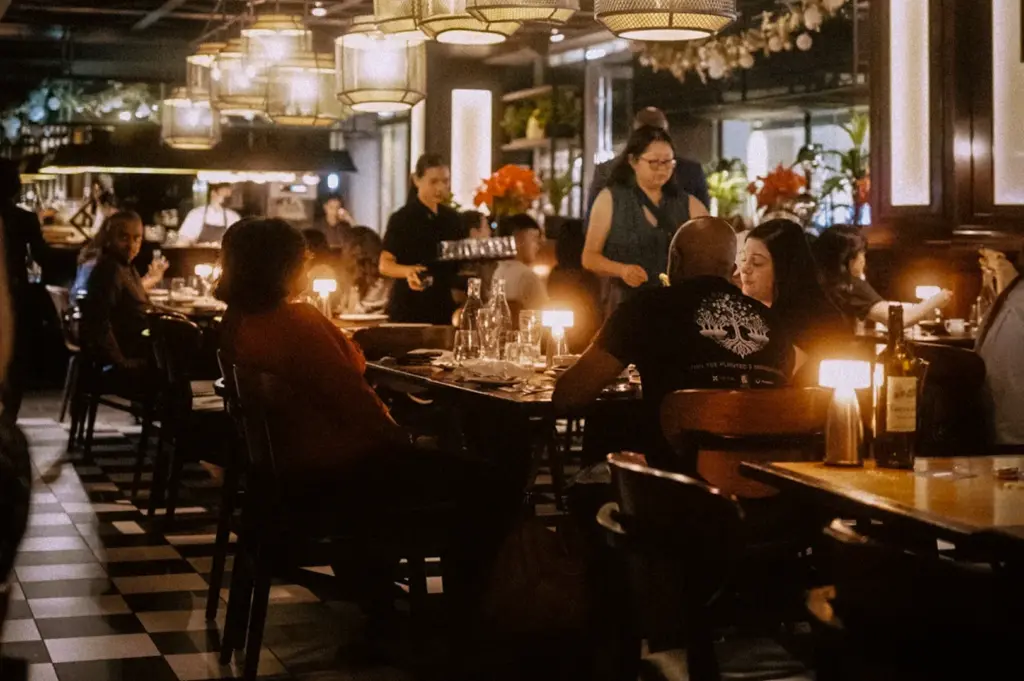
The space follows an industrial design, exposed finishes, darker tones, and an open layout. There’s a visible kitchen area, which adds to the sense of movement rather than creating separation. It’s clearly designed to feel active rather than contained.
During my visit, the restaurant was close to full capacity. Noise levels were higher than expected, with conversations blending into the background. It’s not disruptive, but it’s also not a setting for quiet dining.
Seating also plays a role in how the experience feels. Indoor tables are closer together, which amplifies the energy of the room. Outdoor seating, particularly by the waterfront, offers a more relaxed atmosphere. If given the option, that’s the better choice.
Practical Considerations Before Visiting
- Price Range:
- Lunch: ~S$40–S$80
- Dinner: ~S$80–S$150+ depending on dishes
- Reservations:
- Recommended, especially evenings and weekends
- Best Seating:
- Outdoor tables offer a better overall experience
- Timing:
- Peak hours (7pm–9pm) are noticeably louder and busier
- Dining Duration:
- Typically 60–90 minutes
- Dress Code:
- Smart casual is sufficient
- Portions:
- Larger than fine dining, but still priced at a premium level
The Flow of Service: Efficient, but Not Immersive
Service here operates on a different model compared to more structured dining environments. Orders are taken quickly, and dishes are delivered based on readiness rather than sequence. There’s no attempt to control pacing beyond what’s necessary to keep the table moving. This creates a more flexible experience, but also one that feels less curated.
During peak hours, the system holds up well. Despite the volume of guests, there were no major delays, and staff remained responsive. However, interaction tends to be minimal. Dishes are delivered with little explanation unless prompted, and there’s limited engagement beyond functional service.
Positioning Within Marina Bay Sands: Where It Fits
Bread Street Kitchen occupies a middle ground within Marina Bay Sands.
It’s more elevated than standard casual dining, but significantly less structured than fine dining concepts in the same area. This makes it accessible, but also less distinctive. It doesn’t attempt to specialise, it aims to accommodate.
From a strategic perspective, this positioning allows it to serve a broader audience:
- Tourists looking for a recognisable brand
- Groups who prefer flexibility
- Diners who want a shorter, less formal experience
The trade-off is that it doesn’t excel in any one area. Instead, it delivers a balanced, but not exceptional, experience across multiple aspects.
Consistency and Expectation Management
One of the more important things to understand before visiting is consistency.
The restaurant performs well at a general level, but there can be variation between dishes. Some items feel well-executed and aligned with their pricing, while others fall slightly short. This inconsistency doesn’t define the experience, but it does influence how it’s perceived overall.
Expectation plays a large role here. If you approach it as a casual restaurant with premium pricing, the experience feels coherent. If you approach it expecting a refined Gordon Ramsay-level execution across all dishes, it may feel uneven.
Final Verdict: The Practical Take
Bread Street Kitchen is best understood as a high-energy, casual dining concept operating within a premium environment. It prioritises accessibility, familiarity, and efficiency over precision or depth. The experience is easy to navigate, the menu is broad, and the atmosphere supports social dining.
It works well for group settings, casual dinners, and visitors who want a recognisable name without committing to a full fine dining experience. It’s less suited for occasions that require quiet, focus, or a more curated progression.
Planning to explore other hotel dining experiences? You can check out our guide to Marina Bay Sands top restaurant options, or visit here for more luxury meals across Singapore.