
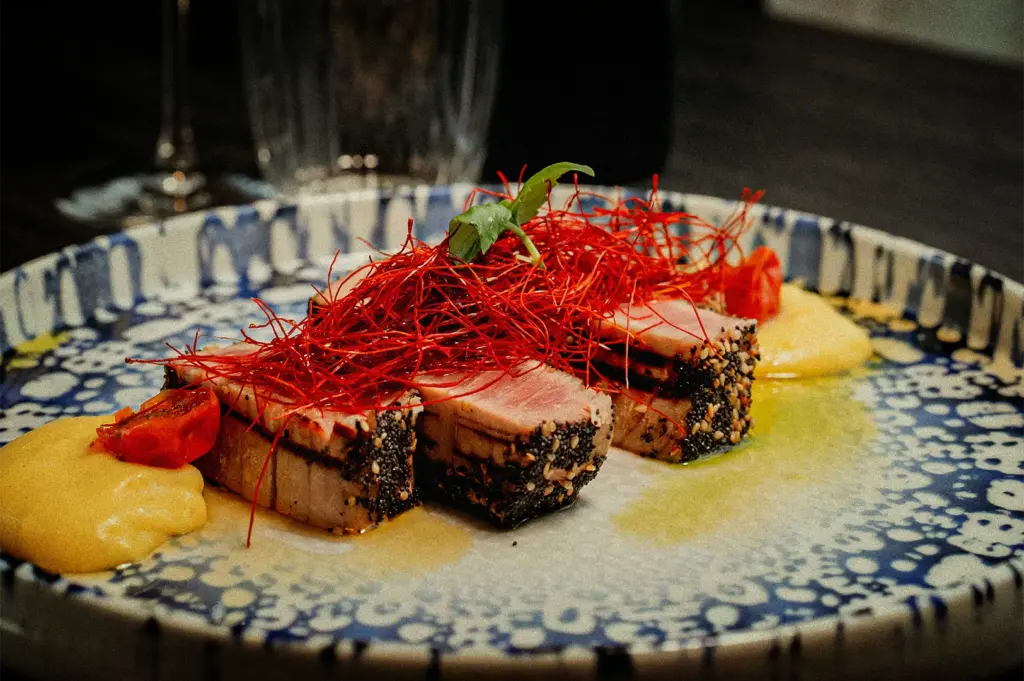
There is a moment that happens during a truly memorable tasting menu that has very little to do with hunger.
It often arrives somewhere in the middle of the meal. The first few courses have already introduced themselves. The conversation at the table has settled into a comfortable rhythm. The outside world feels slightly farther away than it did an hour earlier. And suddenly, you realize you are not simply eating dinner anymore. You are following a story.
The best tasting menus are never a random collection of dishes. They are carefully arranged chapters, each one building on the last. A chef may begin with something light and delicate, offering a quiet introduction before gradually revealing deeper flavors, richer textures, and more complex ideas. By the time dessert arrives, the meal feels complete in the same way a great novel or film does. There is a sense of having traveled somewhere.
What makes these experiences so powerful is that everyone reads the story a little differently.
One guest may be reminded of childhood memories by a familiar ingredient. Another may discover a flavor they have never encountered before. A simple dish can spark a conversation about travel, family traditions, or a moment that had been forgotten until the first bite brought it back.
That is why some tasting menus stay with us long after we leave the restaurant.
I still remember meals where I can no longer recall every ingredient, yet I remember exactly how they made me feel. I remember the excitement of watching a beautifully plated course arrive at the table. I remember the anticipation between dishes. I remember the conversations that unfolded naturally as each course gave us something new to discuss.
Years later, those memories remain surprisingly vivid.
The truth is that food has always been one of humanity’s oldest forms of storytelling. Long before recipes were written down, meals carried traditions, histories, and identities from one generation to the next. Modern tasting menus continue that tradition in a different way. Through ingredients, technique, and presentation, chefs share pieces of their experiences, inspirations, and perspectives with every guest who sits at their table.
The most compelling tasting menus often reveal something personal about the people who create them. A dish may pay tribute to a hometown, a family member, a mentor, or a meaningful journey. Sometimes the story is obvious. Sometimes it is subtle. Either way, diners become participants rather than spectators.
That connection is what separates a good meal from an unforgettable one.
Of course, technical skill matters. Exceptional ingredients matter. Precise execution matters. But none of these elements alone create the emotional resonance that defines a great tasting menu. What lingers is the feeling that every course had a purpose, that every detail was placed there intentionally, and that the entire experience was guiding you toward something larger than the food itself.
Perhaps that is why tasting menus have such a unique place in dining culture. In a world that often encourages speed and convenience, they invite us to slow down. They ask for our attention. They reward curiosity. And in return, they offer an experience that unfolds gradually, one course at a time.
When the evening ends, the final dish is rarely the last thing we take home with us.
We leave carrying fragments of conversations, moments of surprise, shared laughter, and the feeling of having experienced something thoughtfully crafted from beginning to end. The flavors may eventually fade, but the story remains.
And that is the mark of every great tasting menu. It feeds more than our appetite. It gives us something meaningful to remember.