
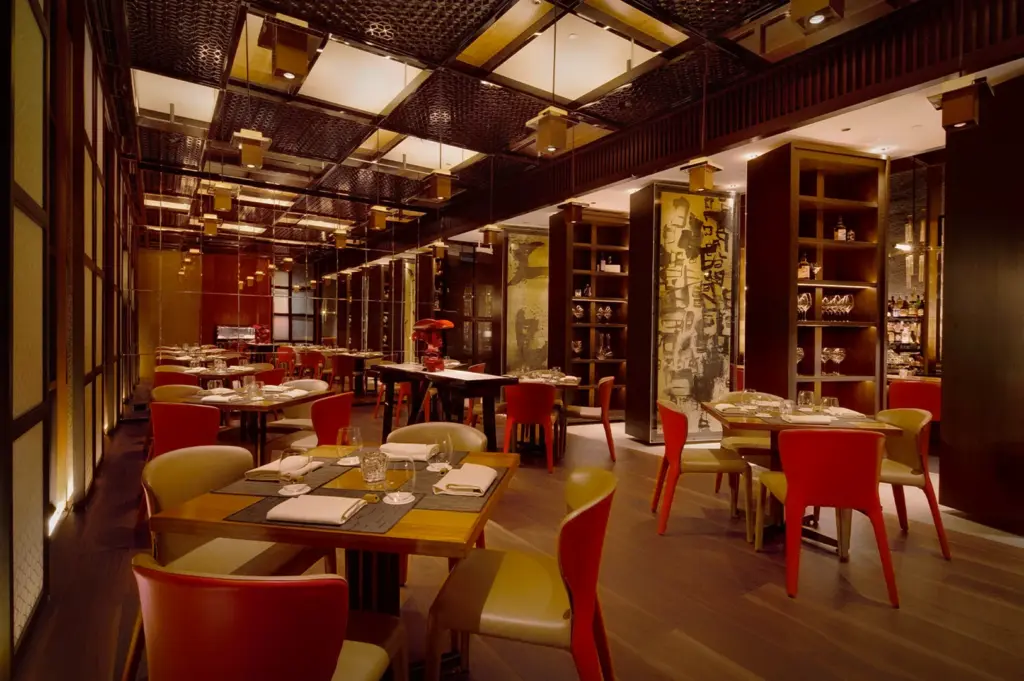
I visited Waku Ghin on a Tuesday around 7pm, walking in with a fairly clear expectation, this wasn’t going to be a casual dinner. It’s one of those places where you already know the experience will be structured, paced, and deliberate.
What stood out immediately wasn’t the décor or the crowd, but the quiet control of the space. There’s no unnecessary noise, no visual clutter. Everything feels measured. You’re not eased into the experience, you’re placed directly into it.
Atmosphere and Layout: Designed for Focus
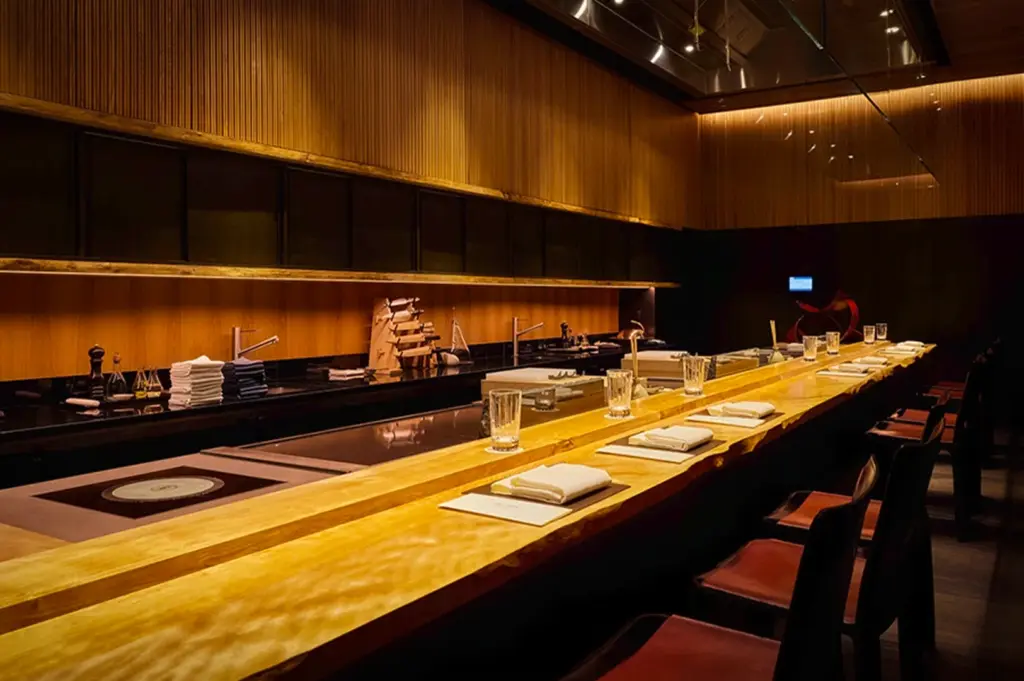
The dining room doesn’t rely on spectacle. Instead, it’s built around restraint. Lighting is soft but functional, you can clearly see each dish without feeling like you’re under a spotlight. Seating is spaced out enough that conversations don’t overlap. I didn’t have to raise my voice once, even when the room filled up.
The temperature, though, leaned slightly cold. I noticed it about 30 minutes in, it wasn’t uncomfortable, but I did wish I had brought a light jacket. That’s something worth preparing for, especially if you’re seated for a full tasting menu.
The layout is also worth noting:
- Counter seating offers a more immersive experience, you can observe plating and final touches
- Table seating feels more private but less interactive
If you’re going for the full experience, I’d recommend asking for counter seats.
The Food: Ingredient-Led, Technically Precise
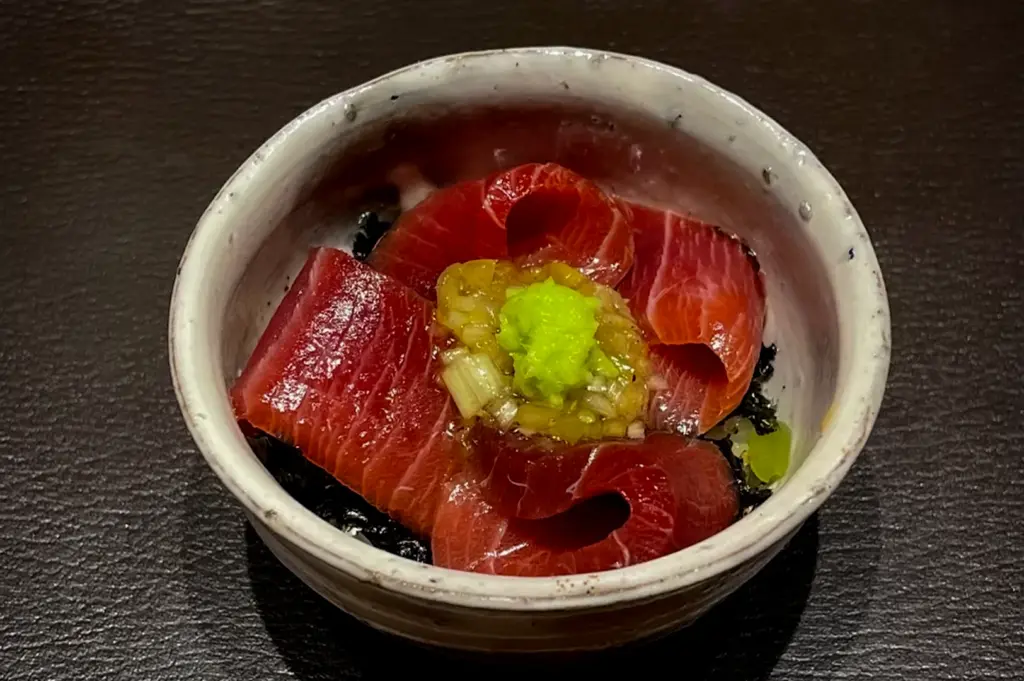
Waku Ghin’s menu is structured around a tasting progression, so you don’t “order” in the traditional sense. Instead, dishes are introduced course by course, each building on the last. Even within the refined Japanese cuisine here, it’s easy to see how the same flavours and techniques also appear in more approachable settings, like the hearty curry rice and comforting Japanese dishes featured on Eat Play Stay.
1. Marinated Botan Shrimp with Sea Urchin and Caviar (~S$400 tasting menu)
This was one of the first standout courses. The shrimp had a clean, natural sweetness, slightly firm but yielding. The sea urchin added a creamy layer, almost custard-like in texture, while the caviar introduced a sharp, saline contrast.
What worked here was balance. Nothing dominated. Each component stayed distinct, but they came together in a way that felt intentional rather than complex.
2. Confit Ocean Trout
This dish leaned heavily into texture. The trout was slow-cooked, resulting in a consistency that was soft without being flaky. It held together, almost like a delicate custard. There was a subtle oiliness, but it didn’t feel heavy.
Temperature played a role here, it was served warm, not hot, which allowed the natural flavour of the fish to come through more clearly.
3. Ohmi Wagyu (A5 Grade)
This was the richest course of the evening. The wagyu arrived in small portions, lightly seared. The fat rendered quickly, coating the palate almost immediately. It’s the kind of dish where one or two bites are enough.
It was served simply, with minimal seasoning. That decision made sense, the focus was entirely on the quality of the beef. Still, if you’re expecting something more layered in flavour, this might feel too restrained.
Where Precision Meets Rhythm: How the Experience Unfolds
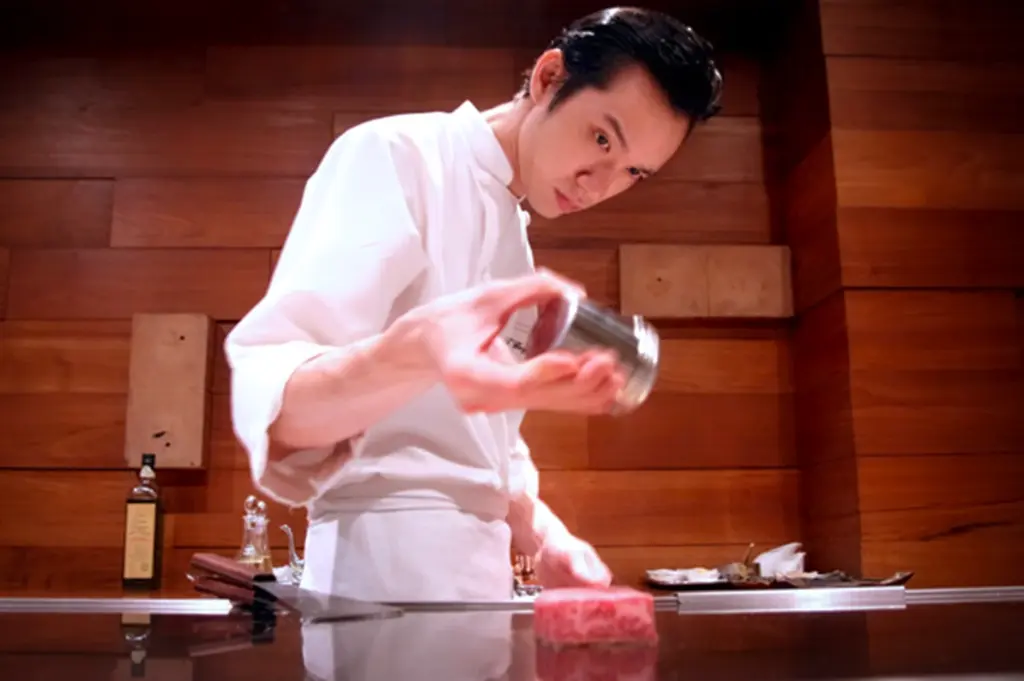
Service at Waku Ghin operates with a level of structure that feels intentional from the first course to the last. Rather than adapting dynamically to each table, the experience follows a controlled rhythm, where timing, presentation, and interaction are carefully aligned. Each course is introduced with concise explanations, enough to inform, but never extended into storytelling or performance.
The pacing throughout the evening is deliberate, and it matches the expectations of a Michelin-starred restaurant. Courses arrive at measured intervals, giving enough time to finish, reflect, and reset before the next one begins. During my visit, I didn’t feel rushed, but I also didn’t have the flexibility to linger excessively between courses. It’s clear that the kitchen and service team are synchronised to maintain flow across all tables, especially given the limited seating windows.
What stands out most is the consistency. There’s no moment where service feels improvised or reactive, it’s planned, rehearsed, and executed with precision. While this creates a smooth and predictable experience, it also means the interaction can feel slightly distant. You’re well taken care of, but not necessarily engaged on a personal level.
Practical Observations Before You Book
- Pricing: Expect around S$400++ per person for the tasting menu. With wine or sake pairing, the total can realistically reach S$500 to S$700+
- Seating Times: Typically two seatings per evening (around 5:30pm and 8:00pm), with limited flexibility
- Reservations: Essential. Advance booking is strongly recommended, especially for weekends
- Seating Choice: Counter seats offer a more immersive experience; table seating is quieter and more private
- Dress Code: Smart casual is acceptable, but leaning slightly formal aligns better with the setting
- Duration: Allocate 2.5 to 3 hours for the full experience
- Temperature: The dining room runs cool, bringing a light jacket is a practical choice
Ingredient Focus Over Complexity: What You’re Actually Tasting
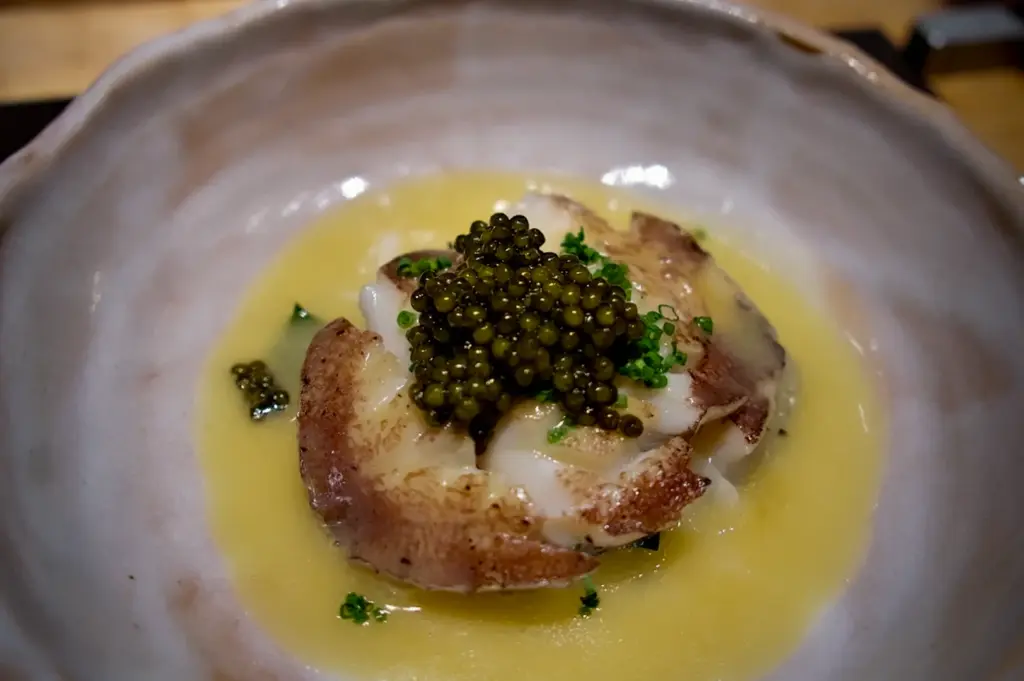
Another important aspect to understand is the restaurant’s approach to flavour. Waku Ghin places strong emphasis on ingredient quality rather than complex layering or bold seasoning. This is evident across multiple courses, where dishes are often presented with minimal components, allowing the main ingredient to remain the focal point.
During my visit, I noticed that flavours tended to be clean, precise, and controlled. There were no heavy sauces or aggressive seasoning profiles. Instead, the dishes relied on natural sweetness, subtle acidity, and careful temperature control. This approach works particularly well for high-quality seafood and wagyu, where overcomplication would detract from the ingredient itself.
However, this also means the experience may not feel immediately impactful for every diner. If you’re used to strong flavours or dramatic contrasts, the restraint here might feel understated. It’s not about intensity, it’s about clarity. Once that expectation is aligned, the experience becomes easier to appreciate.
Final Assessment: What You Should Expect Before You Go
Waku Ghin delivers a very specific type of dining experience, one that prioritises structure, ingredient quality, and controlled execution over flexibility or theatricality. It’s not designed to cater to every preference, and it doesn’t attempt to do so. Instead, it focuses on doing a narrow set of things consistently well.
For diners who value precision, pacing, and a quieter environment, the experience feels coherent and well thought out. It works particularly well for occasions where the goal is to focus on the meal itself rather than the surrounding atmosphere. On the other hand, if you’re looking for variety, bold flavours, or a more dynamic interaction, this may not fully align with your expectations.
For a wider perspective, you can discover more Marina Bay Sands dining experiences alongside a curated guide to the best Singapore hotel dining experiences on Luxury Hotel Meals, bringing together standout concepts across the city.