
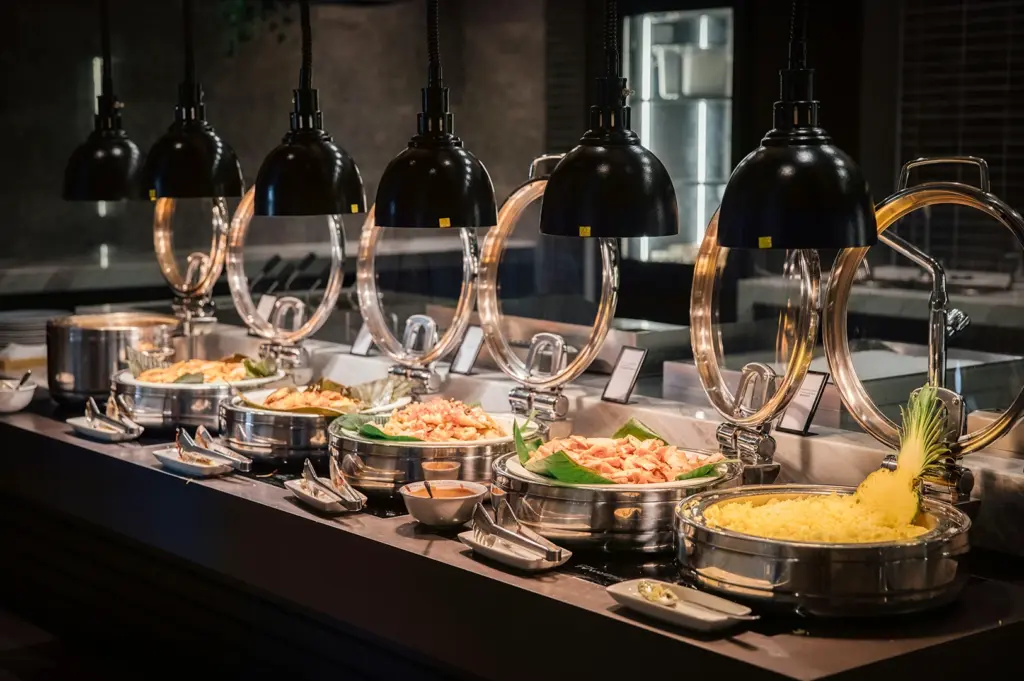
Buffets aren’t just about food, they’re about behavior.
If you stand back for a moment and watch how people move through a hotel buffet, patterns start to appear. Not immediately, but gradually, as the room settles into its own rhythm.
Some people move quickly.
They walk through the entire spread once, scanning everything before picking anything up. It’s efficient, almost strategic. Others stop at the first thing they recognize and build their plate from there, returning later only if something catches their attention.
There’s no single way to approach it.
And that’s what makes buffets different from other dining formats.
In a restaurant, the structure is already decided for you. Starters, mains, desserts, it’s a fixed path. At a buffet, that structure disappears. You create your own sequence, whether you realize it or not.
What’s interesting is how this changes the experience. There’s also a constant movement in the room.
Guests don’t stay seated the entire time. They stand, walk, return, and repeat. Conversations pause and continue in fragments, shaped by when someone gets up or comes back. It creates a different kind of energy. Not chaotic, but active.
The best buffets are designed to support this. Space between stations, clear layouts, and a natural flow that prevents overcrowding. When it’s done well, the movement feels smooth, almost unnoticeable.
By the end of the meal, there’s no clear moment that signals completion. You simply stop. Not because you’ve reached a final course, but because you’ve had enough of the experience. Enough movement, enough variety, enough choice.
And that’s what defines buffet dining. Not just what’s available, but how people move through it.
If you want a deeper look at what luxury hotel dining can feel like in Singapore, you can start here: luxuryhotelmeals.com